Naxovirelover
Lattice Framework
Lattice Framework
Couldn't load pickup availability
- ⬇️ Digital file available after purchase
- 🔄 Long-term availability
- 🔒 Secure checkout
- 🗓️ Content updated in 2026
Self-paced learning overview
Problem Statement
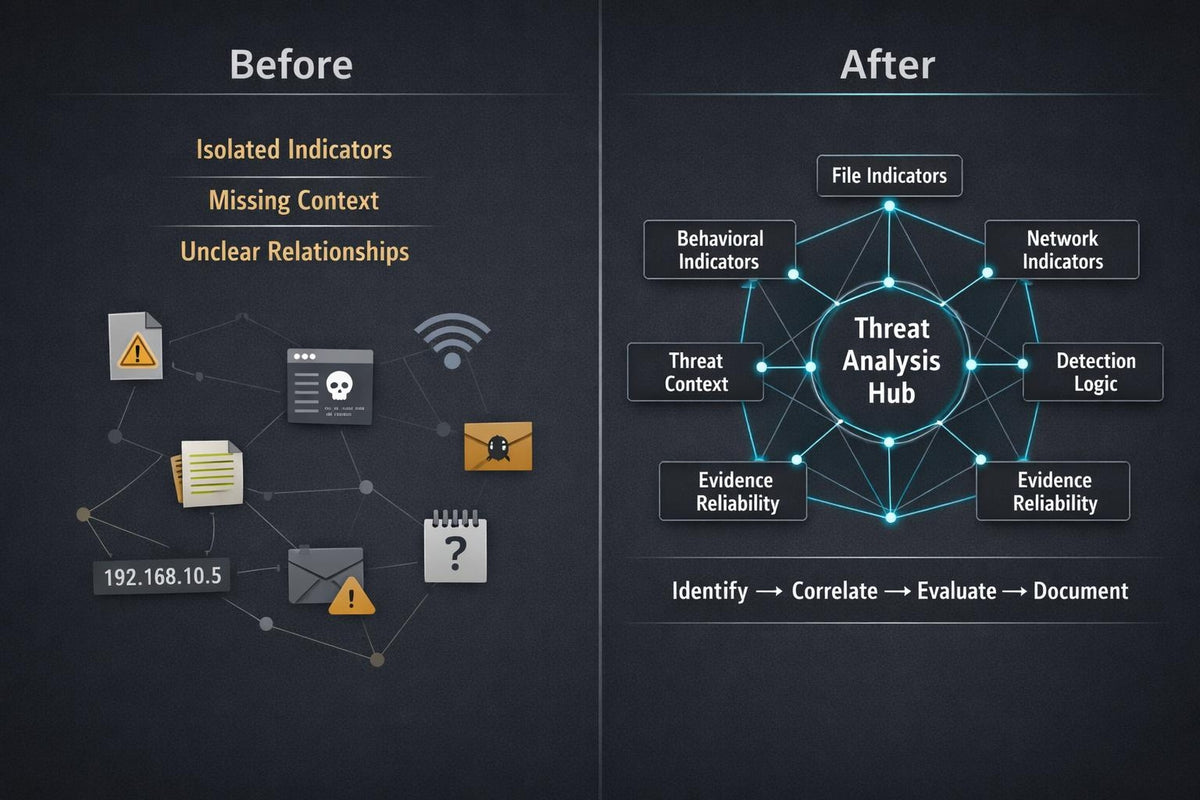
Malware investigations often produce different types of technical evidence, including file characteristics, behavioral observations, network records, and suspicious code patterns.
Examining these indicators individually may not reveal meaningful relationships between related activities.
Learners can struggle to distinguish isolated anomalies from recurring malicious patterns or determine which indicators deserve further investigation.
Interpreting threat intelligence reports and connecting external findings with internal observations can introduce additional analytical challenges.
Without a consistent framework, organizing indicators, evaluating their relevance, and developing detection strategies becomes difficult.
Solution
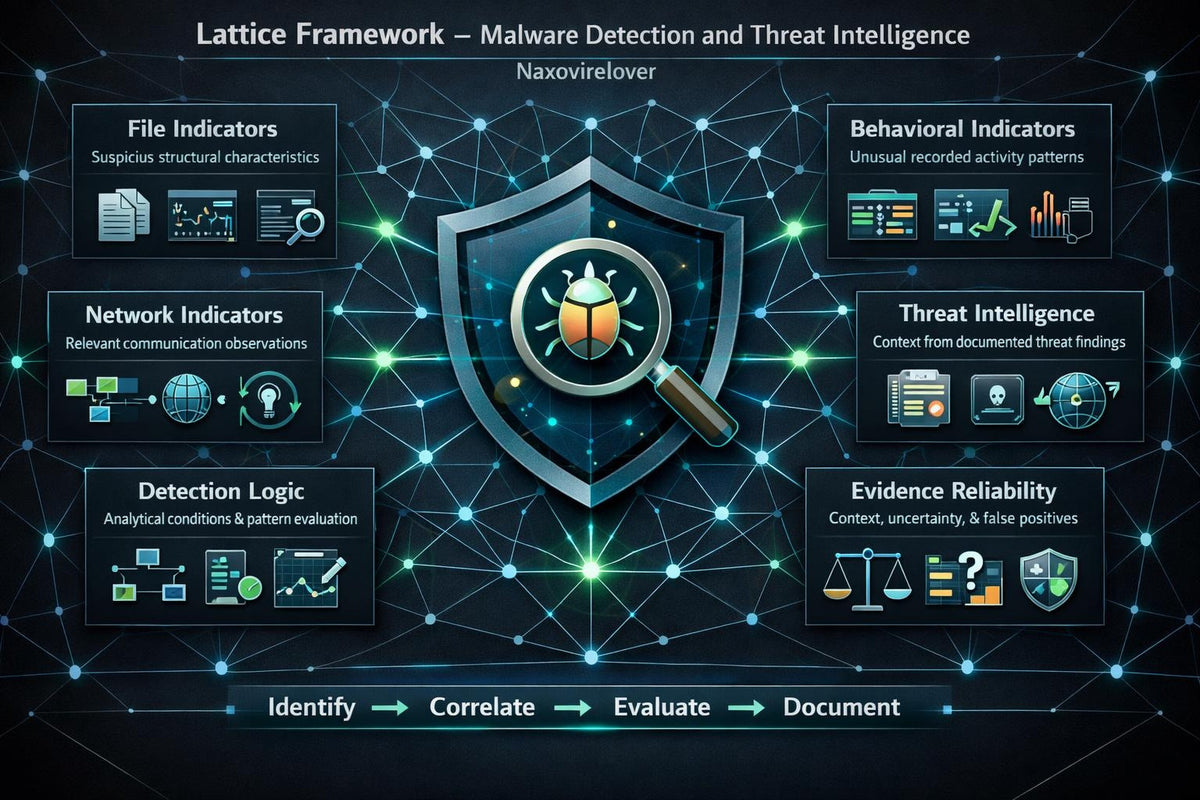
Lattice Framework introduces structured methods for examining malware indicators, correlating technical evidence, and interpreting threat intelligence.
The course explains how analysts classify indicators, identify relationships between investigation findings, and develop analytical detection logic.
Learners explore indicator reliability, behavioral patterns, and the importance of context when evaluating suspicious activity.
Guided exercises demonstrate how to organize prepared evidence, compare investigation scenarios, and construct basic detection conditions.
The materials emphasize evidence-based reasoning, responsible threat research, and clear technical documentation.
What's Inside
Lattice Framework includes downloadable PDF educational materials covering:
- Malware detection principles and analytical workflows.
- Indicators of compromise and behavioral indicators.
- Threat intelligence collection and interpretation concepts.
- Indicator classification, relevance, and reliability.
- Relationships between file, process, and network evidence.
- Detection logic, conditions, and analytical rule structures.
- False positives and contextual evaluation.
- Threat behavior classification and pattern comparison.
- Evidence correlation and investigation prioritization.
- Structured threat intelligence summaries and detection documentation.
- Guided analytical exercises, investigation worksheets, and review questions.
Each module combines technical explanations with fictional investigation scenarios and prepared datasets.
Who Is This For?
Lattice Framework is intended for learners familiar with static analysis, behavioral investigation, and malware-related network activity.
It is suitable for cybersecurity students, defensive security researchers, and independent learners interested in threat intelligence and detection analysis.
Previous knowledge of malware indicators, network records, and investigative documentation is recommended.
What You'll Learn
- Identify different categories of malware-related indicators.
- Explain how threat intelligence supports defensive investigations.
- Evaluate indicator relevance within a specific investigation.
- Correlate file, behavioral, and network observations.
- Recognize recurring patterns across prepared malware scenarios.
- Develop introductory detection conditions.
- Distinguish false positives from findings requiring investigation.
- Organize technical evidence into indicator relationships.
- Compare suspicious activity with documented threat behaviors.
- Produce structured threat intelligence summaries.
- Document detection logic and supporting evidence.
- Apply analytical reasoning to fictional threat investigation cases.
Guarantee
30-Day Money Back: Eligible course purchases may be refunded within 30 days according to our refund policy.
Risk-Free: Review the course details and applicable refund conditions before purchasing. Exercises use prepared educational datasets and fictional investigation scenarios rather than requiring active malicious software.
Share
What is included in Naxovirelover courses?
What is included in Naxovirelover courses?
Our courses contain structured PDF learning materials focused on malware analysis and defensive cybersecurity investigation. Depending on the selected tier, the materials cover suspicious file examination, behavioral analysis, reverse engineering concepts, network traffic interpretation, threat intelligence, and incident reconstruction. Courses include educational explanations, practical examples, exercises, and a certificate of completion.
What format are the educational materials provided in?
What format are the educational materials provided in?
Our courses are delivered as downloadable PDF files containing written lessons, organized modules, technical explanations, diagrams, and educational exercises. The materials are designed for independent reading and practical study without requiring scheduled classes.
Do I need previous cybersecurity knowledge to begin?
Do I need previous cybersecurity knowledge to begin?
No previous cybersecurity experience is required for the introductory Free Kit. It explains foundational malware analysis terminology, file characteristics, and investigation principles. More detailed courses introduce technical subjects that may benefit from familiarity with earlier modules, programming concepts, and basic network terminology.